Key takeaways
- Plan knowledge transfer early and assign clear responsibilities.
- Review critical processes and practical knowledge with the people taking over.
- Consider recruitment and knowledge retention together.
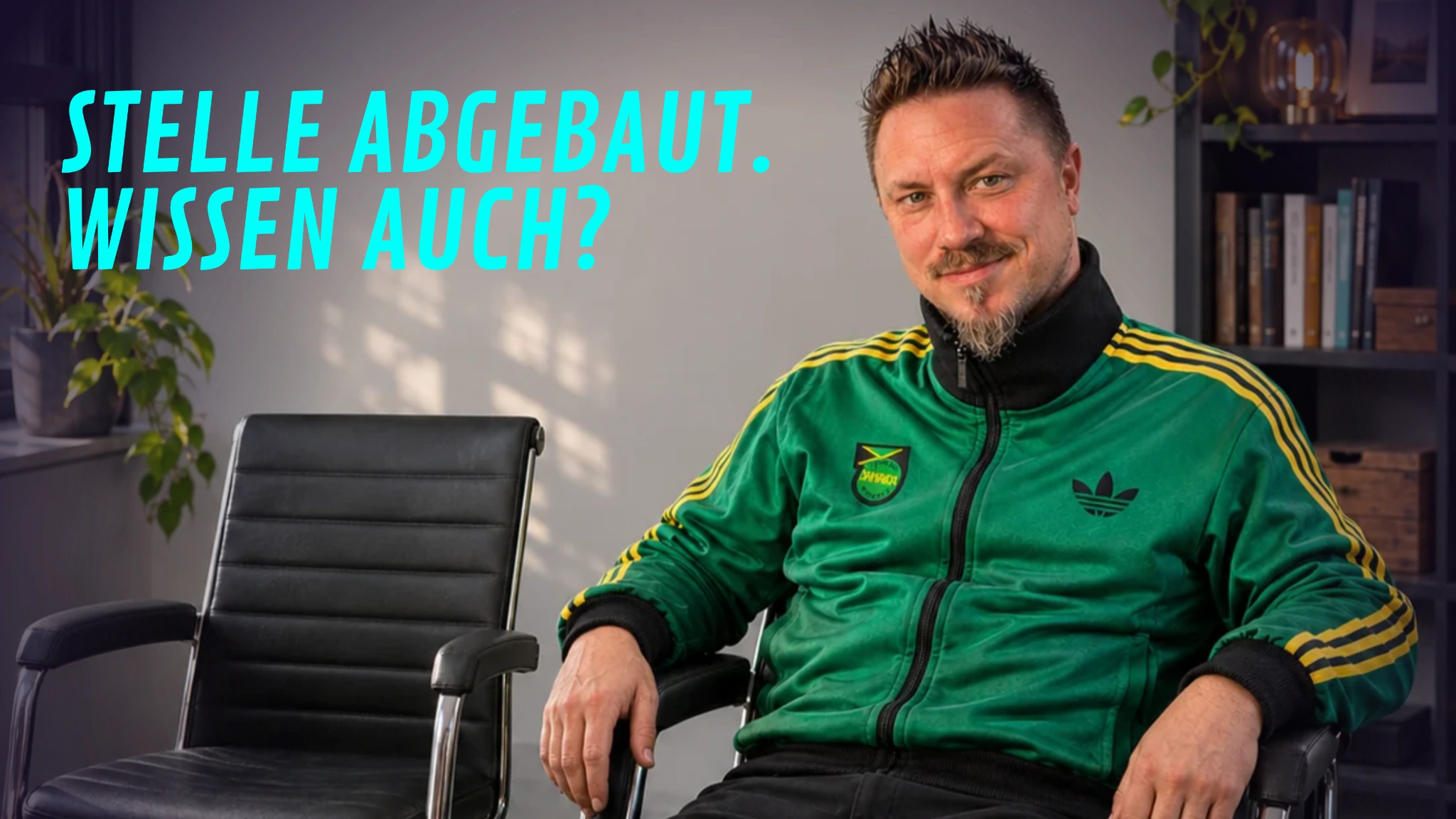
Skills shortages in 2026. Something like this:
Monday: “We can’t find anyone.”
Tuesday: Cut jobs.
Wednesday: Say goodbye to experience.
Thursday: Forget knowledge transfer.
Friday: “Does anyone know someone with exactly this expertise?”
A deliberately fictional, exaggerated working week. But it raises a question businesses should take seriously: what happens to the knowledge when people leave?
Of course, cutting jobs can be economically necessary. Losing the knowledge at the same time is not an economic necessity.
This is where professional offboarding matters.
What does offboarding mean for knowledge transfer?
Offboarding includes organising an employee’s departure. For knowledge transfer, this means identifying relevant practical expertise, naming appropriate recipients and arranging a handover that enables others to put it to use.
Returning a laptop and keys can be ticked off quickly. Questions like these are harder:
- Which exceptions does only this person know about?
- Why is a process carried out in this particular way?
- Which customer agreements matter for the ongoing relationship?
- How does an experienced specialist spot early signs that something is going wrong?
- Who can actually take over these tasks after the departure?
A saved file does not automatically answer these questions. A handover also needs opportunities to explain context, ask follow-up questions and work through tasks together.
Recruit skilled people and retain existing knowledge
Skills shortages remain a practical challenge: according to the KfW-ifo Skilled Labour Barometer for October 2026, published on 19 November, a lack of skilled staff constrained business activity at 23 per cent of companies at the start of the fourth quarter. [1]
This figure describes the skills situation. It does not establish that these same companies previously cut jobs or lost knowledge.
My point is a business one: when looking for new skilled employees, also examine what knowledge already exists within the company and how it can be retained through staff changes.
This applies to retirement, a move to another employer, an internal transfer or restructuring.
An insight from our ME-HR Connect Business Breakfast
We discussed this connection with Katharina Daviaud from ck quadrat at our ME-HR Connect Business Breakfast at Denkstation in Hilden.
ck quadrat works in transformation and knowledge management. Its services include onboarding, offboarding and process documentation. Its “Wissensstafette” also provides a tool for capturing and transferring practical expertise. [2]
For me, the two belong together: recruiting skilled people and taking care not to lose existing knowledge.
A new employee brings their own experience and abilities. They still need to learn the specifics of the business. A prepared knowledge handover provides an important foundation.
Five questions for the next handover
As a practical starting point, I recommend clarifying these five points with the departing employee and the relevant department:
| Question | What to record |
|---|---|
| What knowledge will still be needed? | Critical processes, recurring exceptions, important contacts and unfinished work. |
| Who will take over this knowledge? | Named people or teams, even if the eventual successor has not yet been selected. |
| How will the handover work? | For example, by working together, documenting processes or explaining practical examples. |
| When will it happen? | Agreed dates with enough time for questions before departure. |
| How will we know it has worked? | The person taking over can explain the process and carry out a typical task independently. |
A hypothetical manufacturing example: an experienced specialist knows what causes a recurring machine fault. A useful handover would record symptoms, checks and previous solutions, and include working through a case together.
This turns “Only one person knows this” into a foundation others can use.
The handover starts before the farewell cake
Ideally, these conversations begin well before the final working day, between returning the laptop and sharing farewell cake.
Knowledge transfer needs time, clear responsibility and respect for the people sharing their expertise. Starting early creates room for a useful handover.
At SEARCH4, this perspective is part of recruitment: what skills does the new employee need, what knowledge stays in the team, and what induction must the company provide?
Otherwise, tomorrow we may be searching for the expertise that was still sitting in the business yesterday.
How professionally is offboarding organised in your business, and who is responsible for knowledge transfer?
Planning a replacement hire? Let’s clarify the profile you need and the conditions that will support a good start.
Sources & further reading
Sources checked on 23 November 2026. The satirical working week and manufacturing example are fictional. The practical questions are the author’s recommendations.
How professionally is offboarding organised in your business, and who is responsible for knowledge transfer?
We welcome your experience and questions on this topic.
Explore our approach ↗